Furnace repair
Prepare ignition, airflow, control, venting, and heat-exchanger symptoms for a qualified on-site diagnosis.
Explore this service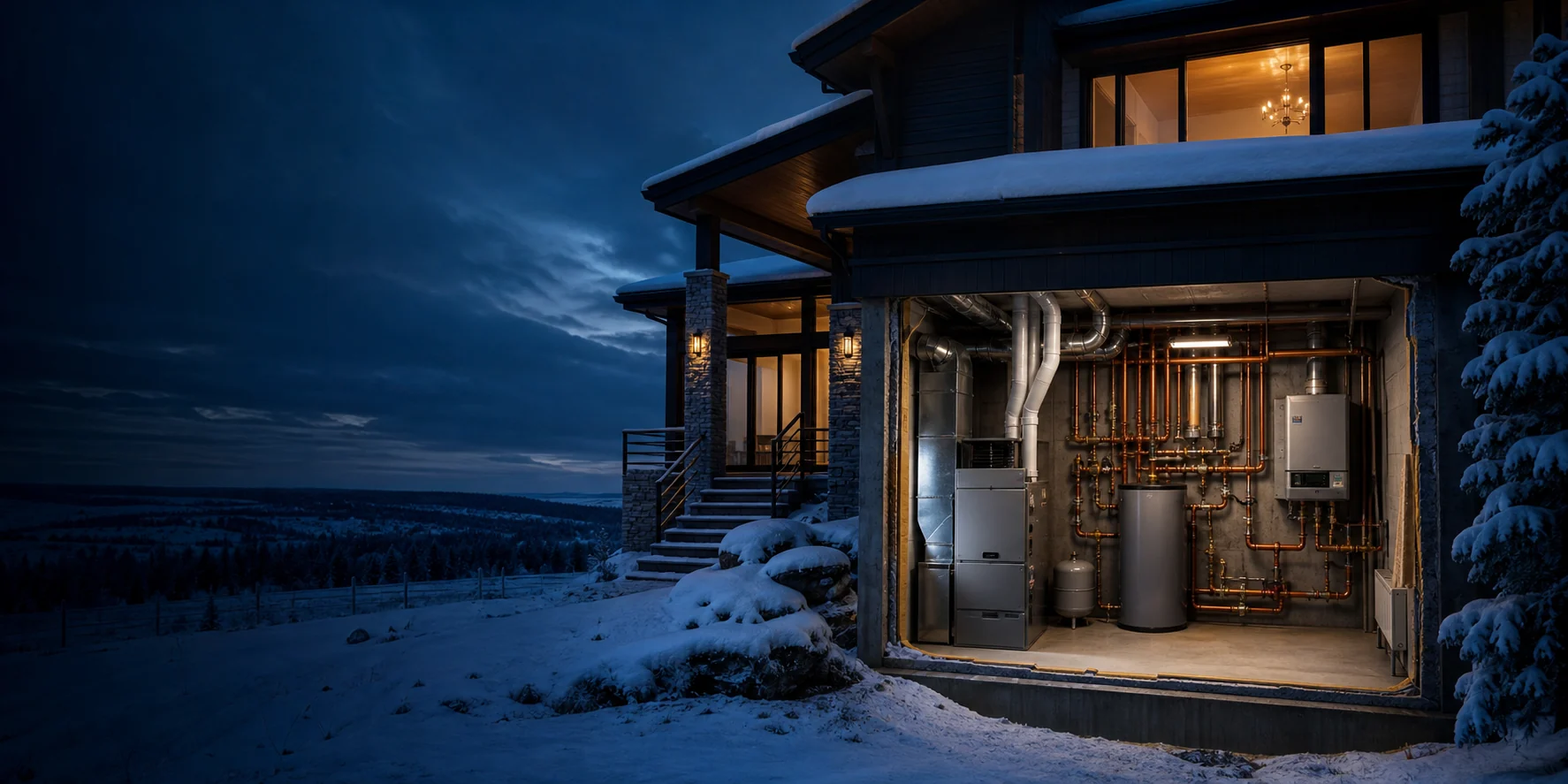
Fort St. John heating information
Understand no-heat, furnace, boiler, and cold-climate heat-pump concerns before requesting an on-site assessment from an appropriately qualified provider.
Generated illustrative scene · not a company project photo
Heat Path Console
Choose what the home is doing. The console highlights the first parts of the heating path worth discussing—without pretending a screen can diagnose equipment.
 Generated illustrative scene · not a company project photoCreate heatMove energyDeliver comfortVerify controls
No-heat calls begin with power, thermostat demand, ignition or burner sequence, safety lockouts, fuel supply, and whether the equipment can operate safely.
Conceptual guidance only. An on-site assessment determines the fault and safe next step.
Cold Snap Readiness Studio
Explore the questions that become more important as temperatures fall. This is not a load calculation—it is a better way to prepare for one.
At lower temperatures, equipment condition, distribution, thermostat strategy, envelope loss, and the response to a lockout all matter.
Heating request categories
Information for furnace, boiler, heat-pump, and whole-system assessment requests in the Peace Region.
Prepare ignition, airflow, control, venting, and heat-exchanger symptoms for a qualified on-site diagnosis.
Explore this serviceOrganize burner, pressure, circulation, control, pump, and zone concerns for an on-site assessment.
Explore this serviceAsk about sizing, electrical readiness, low-temperature capacity, distribution, and supplemental heat before selection.
Explore this servicePrepare comfort, equipment, fuel, control, and distribution details when repair or replacement is being considered.
Explore this service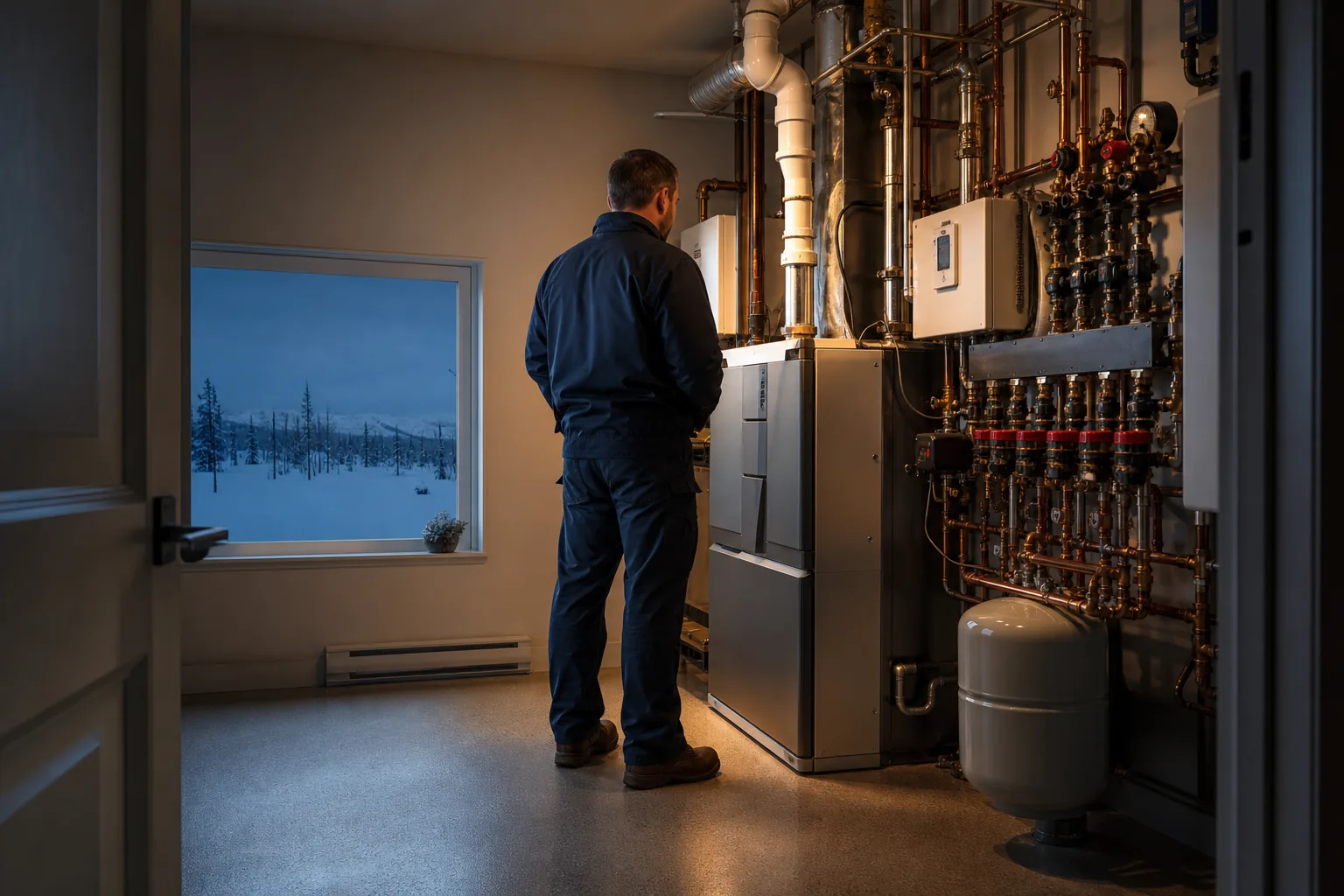
Inside the response
A clear request follows the heating sequence—from demand and ignition to circulation, delivery, and safe verification—without pretending to replace an on-site diagnosis.
Generated illustrative scene · not a company project photo
How heat holds
An informed assessment follows energy from creation to control. Each stage can change what a qualified provider should test next.
Start with your symptomsEvery system begins by producing or moving heat safely. A fault here can mean full no heat, repeated lockout, or weak output.
Blowers, filters, ducts, pumps, pressure, and zone valves determine whether generated heat reaches the rest of the home.
Cold zones, long recovery, noise, and uneven temperature can point toward distribution, envelope, control, or sizing questions.
Operation, temperature response, safety controls, and the homeowner’s actual comfort complaint all need to align.
Illustrative diagnostic sceneWhy these prompts
A clear request distinguishes an immediate safety or no-heat concern from a planned assessment without promising emergency dispatch.
Furnace, boiler, electric, propane, and dual-fuel systems do not present the same assessment questions.
Access, parts, controls, venting, distribution, electrical work, and equipment condition can shape a provider's written scope.
Any proposed next step should follow qualified on-site findings—not a preselected sales ladder.
Warning signs
Share what changed, when it began, and whether the whole home or one zone is affected.
Equipment will not start, repeatedly resets, or stops after ignition.
Frequent starts and stops without a steady comfort cycle.
Uneven delivery, weak airflow, or one hydronic zone staying cold.
Boiler gauge changes, gurgling, banging, or circulation concerns.
Higher energy use, longer recovery, or a home that no longer holds temperature.
How it works
An organized request preserves useful details and keeps safety concerns separate from routine assessment questions.
Describe the Fort St. John property, symptoms, fuel type, and timing so the first conversation starts with useful details.
Separate a safety concern or active no-heat condition from a planned assessment, maintenance question, or replacement decision.
Follow-up can clarify the scope, timing, and whether an on-site assessment is available for the property.
Before authorizing regulated work, verify qualifications, written scope, permit responsibility, pricing, and the safety process.
Peace Region requests
Requests are accepted from Fort St. John and the listed nearby communities. Follow-up confirms the property, scope, timing, and next available step.
Start with the property, the equipment, and exactly what changed.
Heating questions
What homeowners should know before a repair, assessment, or replacement conversation with a provider.
Protect people first. If safe, note the thermostat setting, whether the equipment has power, any visible fault code, fuel status, and whether the whole home or only one zone is cold. Avoid repeated resets or opening combustion equipment.
Leave the building and follow emergency guidance if a carbon-monoxide alarm sounds, a gas leak is suspected, or anyone has possible exposure symptoms. Do not use an online form for an emergency or bypass equipment safety controls.
No. Ignition components, controls, airflow, pumps, valves, and other repairable faults can cause heat loss. Only an appropriately qualified provider inspecting the equipment can diagnose the cause and compare repair with replacement.
Natural Resources Canada says cold-climate systems can operate at very low temperatures, but the home, electrical service, distribution, low-temperature capacity, sizing, and supplemental-heat strategy still matter. A qualified designer should verify the application.
Heating requests are accepted for Fort St. John, Taylor, Charlie Lake, Baldonnel, and Wonowon. Follow-up confirms whether the property and requested timing can be accommodated.
When heat changes, start the response